
Table of Contents
- Why Buying Handmade Beats Another Mass-Market Haul
- Benefits of Buying Handmade Decor: What You Actually Get
- How to Tell If Home Decor Is Truly Handmade
- Sustainable Handmade Home Accents That Last
- How to Style Handmade Decor in Any Room
- Where to Buy Unique Handmade Home Decor Online
- Caring for Hand-Finished Pieces So They Last
- Frequently Asked Questions
Last Updated: September 11, 2026
Why Buying Handmade Beats Another Mass-Market Haul
Walk through any big-box store and you will see the same vase, the same throw pillow, the same framed print in a thousand other homes. That sameness is exactly why so many people now search for ways to buy unique handmade home decor online. This guide from Nae's Specialty breaks down what you actually get when you choose artisan-crafted pieces, how to verify authenticity, and where to source well.
Mass-produced decor is engineered for volume. Handmade decor is made for a person.
That distinction matters more than most shoppers realize. A single artisan can spend hours on one hand-finished bowl, while a factory stamps out thousands in the same window. The result is a piece with small variations, a visible maker's mark, and a story attached. If you have ever bought a mass-market haul and felt bored with it within a month, this is the alternative.
Below, we cover the real benefits, the verification checklist, and the styling moves that make handmade pieces work in any room.
Benefits of Buying Handmade Decor: What You Actually Get
The main benefit of buying handmade decor is character you cannot replicate at scale, backed by the knowledge that your purchase supports a real person rather than a production line. Two things drive that value: uniqueness and small-batch production.
One-of-a-Kind Character You Won't Find in a Big-Box Store
Hand-thrown ceramics, hand-woven textiles, and hand-carved wood each carry small irregularities that mass production eliminates on purpose. A glaze that pools slightly darker on one side of a bowl is not a defect; it is evidence of a human hand. That tactile quality is what makes a space feel collected rather than furnished.
Supporting Makers and Small-Batch Production
Small-batch production means lower volume and higher attention per piece. When you buy from an artisan community rather than a warehouse, more of your money reaches the person who made the object. Many makers also work with ethically sourced and sustainable materials because they control their own supply chain. That is the practical case for conscious buying, and it holds up.
How to Tell If Home Decor Is Truly Handmade
Authenticity verification comes down to three checks: maker transparency, process detail, and material honesty. If a listing cannot answer all three, treat the "handmade" label as marketing.
Reading Maker Stories and Process Details
Genuine listings name the maker, the technique, and the materials. Look for phrases like hand-thrown, hand-carved, or hand-finished paired with a specific process description. A listing that says "artisan-inspired" without naming a technique or a person is usually a factory product with better photography.
Fair Trade Labels and What They Signal
Fair trade certification signals that a product met third-party social and environmental standards, not just that it was made by hand (fairtradecertified.org). The Fair Trade Certified program overview explains what those standards cover. A fair trade label does not guarantee aesthetics, but it does confirm that the maker was paid and treated according to an audited standard, which matters if ethical sourcing is part of why you are buying handmade in the first place.
Sustainable Handmade Home Accents That Last
Sustainable handmade home accents tend to last longer than their mass-market equivalents because they are built from repairable natural materials rather than composites and adhesives. Solid wood can be sanded and refinished. Wool can be re-woven. Ceramic can be re-glazed. None of that is true of a particleboard shelf or a polyester pillow.
That durability is the quiet environmental argument for handmade goods. A piece you keep for a decade replaces several cheap replacements, and the EPA guidance on reducing household waste makes the same point about buying durable goods over disposable ones.
Look for materials that age well: solid hardwoods, natural fibers, stoneware, and undyed or low-impact dyes. Skip anything sealed with a finish that cannot be touched up, because a single scratch will end its life early.
How to Style Handmade Decor in Any Room
The fastest way to make handmade decor look intentional is to mix it against clean, simple backdrops and let one or two pieces carry the room. Clutter hides craft; restraint shows it. The sections below break that principle into moves you can apply room by room, with the scale and placement rules that separate a collected look from a cluttered one.
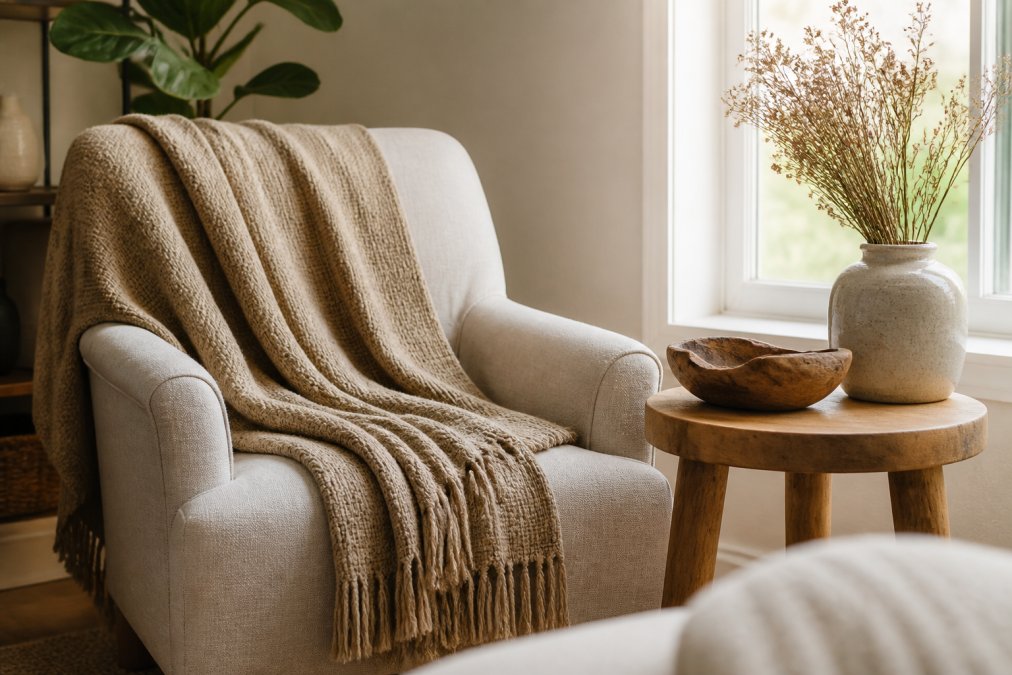
Mixing Textural Elements and Statement Pieces
Textural elements do the heavy lifting in an interior styling plan. Pair a smooth surface with a rough one: a glazed ceramic lamp beside a raw linen cushion, or a polished wood table under a chunky wool throw. One statement piece per zone is enough. Two competing statement pieces usually read as noise.
A few rules of thumb that hold up across styles:
- Odd numbers read as collected. Group three small handmade objects, a carved bowl, a stoneware cup, a small woven basket, rather than two or four. Even numbers tend to look staged.
- Vary height within a group. A shelf vignette works when the tallest piece is roughly twice the height of the shortest. Flat rows of same-height objects look like a store display.
- Give each handmade piece breathing room. Leave at least a hand's width of empty surface around a statement object. Craft needs negative space to register.
- Repeat one material, not one color. Carrying raw wood through a room in three different forms (a bowl, a frame, a stool) creates cohesion without matching-set energy.
Room-by-Room Placement
Different rooms reward different handmade categories. A few placements that consistently work:
- Living room: one large textile (a throw or floor cushion), one sculptural object on the coffee table, and one piece of wall art. Resist filling every surface.
- Bedroom: handmade bedding and one ceramic or wood object on the nightstand. Keep the rest of the surface clear so the piece reads as deliberate.
- Entryway: a hand-woven runner or a single hand-thrown catchall tray for keys. High-traffic zones benefit from pieces that are both useful and beautiful.
- Kitchen and dining: hand-thrown mugs, a wooden serving board, or a ceramic pitcher used as a vase. Functional handmade goods earn their space because they get used daily.
Small-Space and Renter-Friendly Ideas
Renters should focus on pieces that move with them. Wall art, textiles, lighting, and decorative objects all travel well and require no drilling or permanent changes. A curated collection of three small handmade objects on a shelf often reads stronger than one large piece, and it packs into a single box when the lease ends.
For small rooms, scale down rather than crowd. A single hand-thrown vase on a narrow console beats five small objects fighting for the same surface. If you want the collected look in a tight footprint, rotate pieces seasonally instead of displaying everything at once, store the off-season items wrapped and swap them in when the room starts to feel stale.
Where to Buy Unique Handmade Home Decor Online
The best places to buy unique handmade home decor online are curated shops that vet their makers and publish process details, followed by direct-to-maker marketplaces and local craft fairs that also sell online. Each has trade-offs.
| Source | Best For | What to Verify |
|---|---|---|
| Curated shops | Busy shoppers who want pre-vetted pieces | Maker names and process notes |
| Direct-to-maker marketplaces | Browsing many artisans at once | Individual shop reviews |
| Craft fairs with online stores | Meeting the maker first | Shipping and return terms |
| Estate and vintage sellers | Vintage-inspired statement pieces | Condition and repairs |
Budget-Friendly Artisan Sourcing
Most guides assume you are shopping at the high end. You do not have to. A few strategies consistently stretch a small budget further without sacrificing authenticity:
- Buy small first. Decorative objects, mugs, catchall trays, and small textiles carry the same maker story as a large piece at a fraction of the price. Start there and build up.
- Shop off-season. Makers often discount seasonal inventory, holiday textiles in January, summer ceramics in September, rather than carry it for a year.
- Look for seconds and samples. Many artisans sell pieces with minor glaze or finish variations at a reduced price. These are usually the same quality with a cosmetic imperfection, and the discount is often substantial.
- Buy one well-made piece instead of five cheap ones. A single hand-thrown bowl that lasts a decade costs less per year of use than a rotating stack of mass-market replacements.
- Follow makers directly. Many artisans announce sales, seconds drops, and new collections to their email list or social feed before they hit a marketplace. Following a handful of makers you like is free and often gets you first access.
- Skip the middleman when you can. Direct-to-maker shops usually pass more of your money to the artisan than a large marketplace does, and the maker can answer questions about materials and care personally.
How to Vet a Seller Before You Buy
A short pre-purchase check catches most problems:
- Read the maker bio. Genuine shops name the person, the studio location, and the technique. A generic brand name with no human attached is a warning sign.
- Look at the photos for variation. If every listing photo shows an identical item with identical grain or glaze, the pieces are likely molded or printed rather than individually made.
- Check the reviews for language about process. Reviews that mention "the maker" or describe a specific material tend to come from real buyers of real handmade goods.
- Confirm the return and shipping policy. Handmade pieces are often made to order, so lead times and return windows differ from mass-market retailers. Know the terms before you commit.
- Ask a direct question. A quick message about materials or production time is the fastest authenticity test. Makers answer in specifics; resellers of factory goods usually do not.
At Nae's Specialty, every item is personally handpicked by founder Renee, so you are choosing from a pre-vetted selection rather than scrolling an unvetted marketplace. That single destination approach saves time if you would rather not compare dozens of sellers yourself.
Caring for Hand-Finished Pieces So They Last
Hand-finished pieces need gentler care than factory-sealed ones, and the routine is simple: dust regularly, clean with mild soap, and keep pieces out of prolonged direct sunlight. Most damage to handmade decor comes from harsh cleaners, not from age.
A quick care checklist:
- Dust wood and ceramic weekly with a dry, soft cloth
- Wash textiles cold and air dry to prevent shrinkage
- Re-oil bare wood once or twice a year
- Keep dyed textiles out of direct sun to slow fading
- Store seasonal pieces wrapped, never stacked under weight
A common mistake is treating a handmade piece like a factory product and reaching for an all-purpose spray. Abrasive cleaners strip natural finishes, and once a hand-rubbed oil finish is gone, restoring it takes real work. Mild soap and water handle almost everything.
Buying handmade takes more thought than adding the same mass-market item to a cart, and that is the point: the extra attention is what makes the piece yours. Nae's Specialty was built for exactly this kind of shopper, with personally handpicked products, a curated selection spanning home and pet essentials, and a focus on quality, utility, and beauty in every item. If you want decor that brings comfort and charm without the guesswork, browse the Nae's Specialty collection and find the piece your space has been missing.
Frequently Asked Questions
How can you tell if home decor is truly handmade?
Look for small variations in shape, color, and finish, since no two handmade pieces are identical. Check maker stories and process photos on the product page, and search for terms like hand-carved, hand-woven, or hand-finished in the description. Fair trade or artisan community labels also signal authentic craftsmanship. If a listing shows a perfect, uniform product with no maker information, it is likely mass-produced.
What are the benefits of buying handmade decor?
You get one-of-a-kind pieces with real character instead of identical copies from a factory. Handmade decor often uses sustainable materials and small-batch production methods, which means less waste and better working conditions for makers. Each purchase supports an artisan community directly. The tactile quality of hand-finished wood, clay, or textiles also adds warmth that machine-made items rarely match.
How do you style unique handmade pieces in a modern home?
Start with one statement piece per surface, like a hand-carved bowl on a coffee table or a hand-woven textile draped over a chair. Balance it with neutral, simple furniture so the artisan piece stands out. Group items by texture rather than color for a cohesive look. For renters, choose lightweight, wall-friendly pieces like woven wall hangings or ceramic accents that move easily.
Where can you buy unique handmade home decor online?
Curated small shops are often better than large marketplaces because a real person selects each item. Look for stores that share maker stories, show close-up photos of the craftsmanship, and explain their sourcing. Nae's Specialty, for example, handpicks every product and offers a focused collection of home accents and lifestyle pieces. Always check the return policy before ordering, especially for fragile items.